 GLORY MACHINERY | Metal Polishing & Grinding Solutions
 What Is No.4 Stainless Steel Finish? A Complete Guide for Metal Processors
No.4 stainless steel finish is one of the most widely specified mechanically polished surfaces for architectural panels, elevator interiors, kitchen equipment, appliance components, decorative fabrication and general metalwork. It has a directional grain, moderate reflectivity and a clean industrial appearance without producing a mirror image. For processors, however, No.4 is not simply a visual label or a single abrasive grit. It is a controlled surface-processing result that depends on the incoming material, abrasive sequence, contact pressure, line speed, coolant or dust-control method, strip or sheet stability and final protection.
In normal production, No.4 is commonly ground or polished from cold-rolled 2B or bright-annealed BA material. A 2B surface is a practical general-purpose starting condition because it is relatively smooth and readily polished. BA is smoother and more reflective, but the polishing process must still produce a uniform directional texture. The correct starting surface should be confirmed against the target appearance, material grade, thickness, flatness and end-use specification.
Current Industry Development
Demand for controlled decorative stainless steel surfaces continues across elevator manufacturing, architectural cladding, interior fit-out, food-service equipment and fabricated consumer products. These users often need more than a nominal finish designation. They expect repeatable grain direction, balanced gloss, limited color variation, clean edges and acceptable consistency between different coils, sheets and production batches.
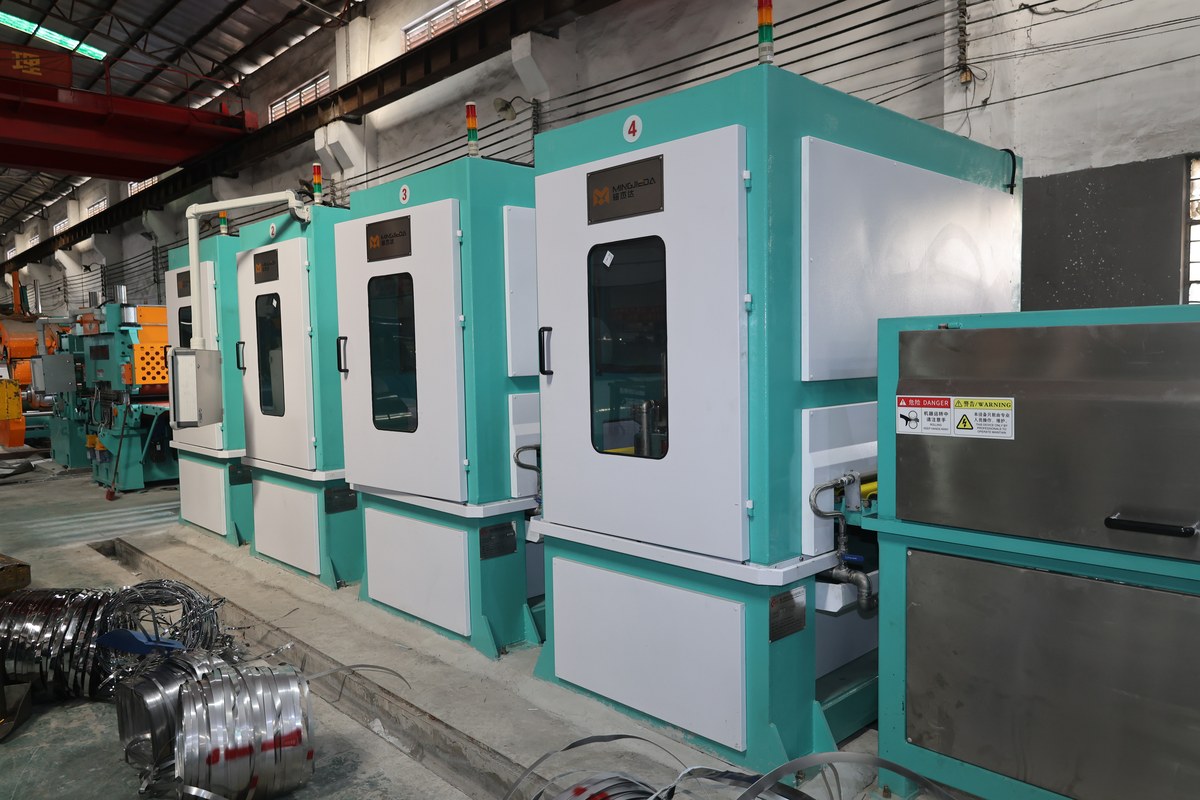
This requirement is changing how processors evaluate finishing equipment. A workshop that previously accepted manual correction may now need continuous lines with stable material transport, recipe-based controls, centralized extraction or coolant management, and inspection points before lamination. Coil-to-coil processing is useful when long production runs and continuous texture are required. Sheet-to-sheet machines are appropriate when processors handle cut sheets, multiple sizes or production schedules that require flexible batch changes.
No.4 also needs to be distinguished from Hairline and Scotch-Brite finishes. No.4 normally shows a clearly visible, relatively short and uniform directional grain created with coated abrasives. Hairline finishing generally targets a finer, longer and more continuous linear pattern. Scotch-Brite finishing uses non-woven abrasive media to create a softer satin character. Commercial names vary between markets, so approved samples should take priority over terminology alone.
Surface Finishing Technology
The production route begins with incoming-material control. No.4 is generally produced from 2B or BA stainless steel because these cold-rolled surfaces provide a comparatively smooth and consistent base. Surface defects already present in the coil or sheet can remain visible after polishing or can require more stock removal than expected. Processors should therefore inspect scratches, roll marks, waviness, oxidation, handling damage and local contamination before finishing.
The abrasive sequence depends on the initial condition and the approved target. Industry references commonly associate No.4 with a final treatment in approximately the 120-150 abrasive range after initial grinding with coarser abrasives. This is a useful description, but it is not a complete production specification. Abrasive mineral, belt construction, backing, grit standard, belt wear, contact-wheel hardness, cutting pressure, lubrication and machine configuration can all change the visual result. Two lines using nominally similar grit can therefore produce noticeably different grain and reflectivity.
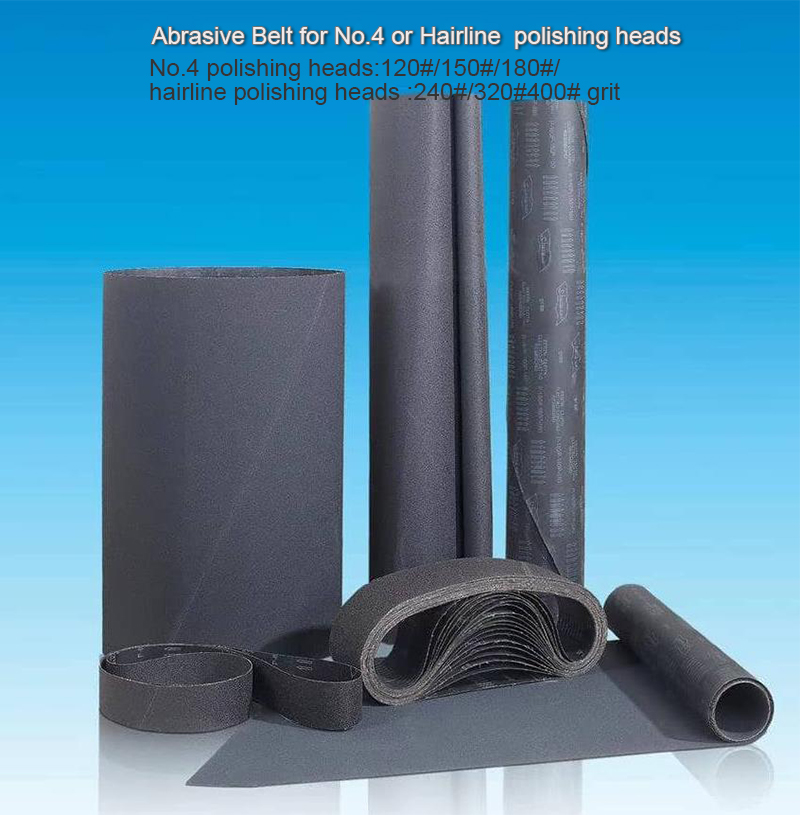
The abrasive belt is the cutting tool that contacts the steel surface. As it moves over the contact system, its abrasive grains remove a controlled surface layer and form the characteristic directional snowflake texture. Common No.4 belt examples include 120, 150 or 180 grit, but the final choice must be verified against the incoming 2B or BA surface and the approved sample.
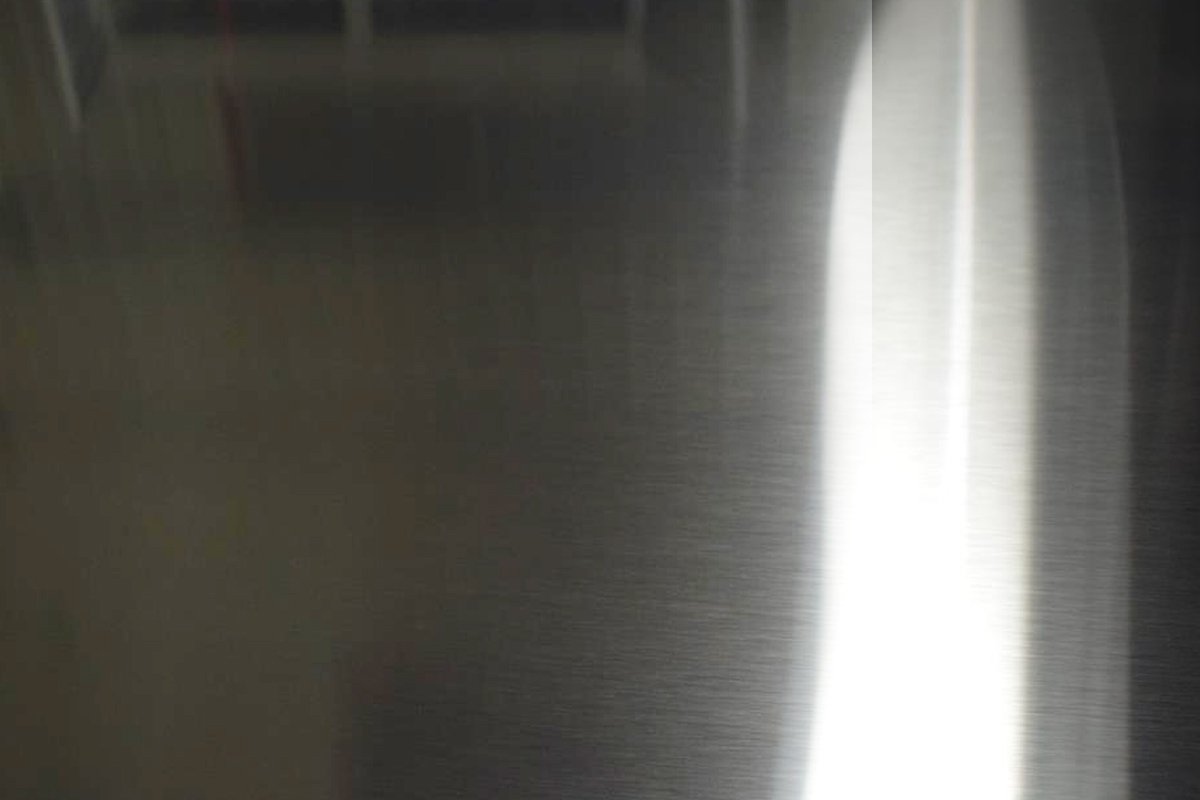
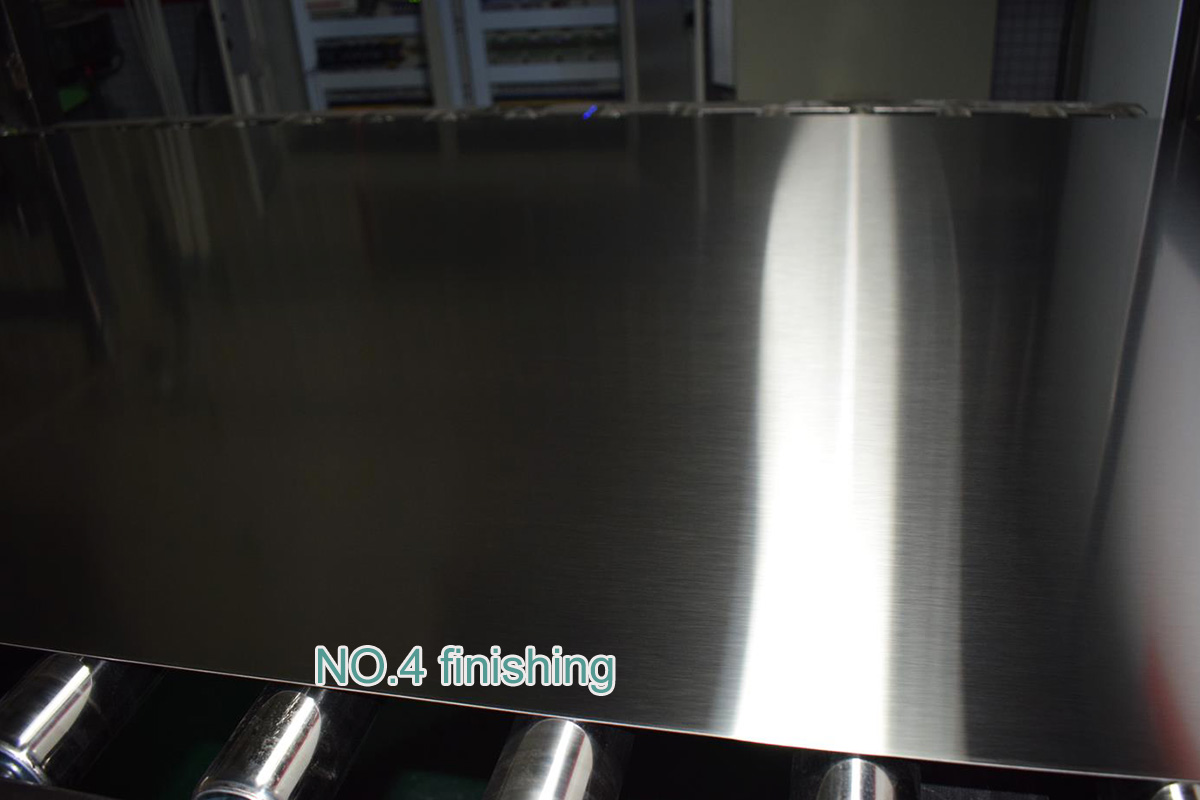
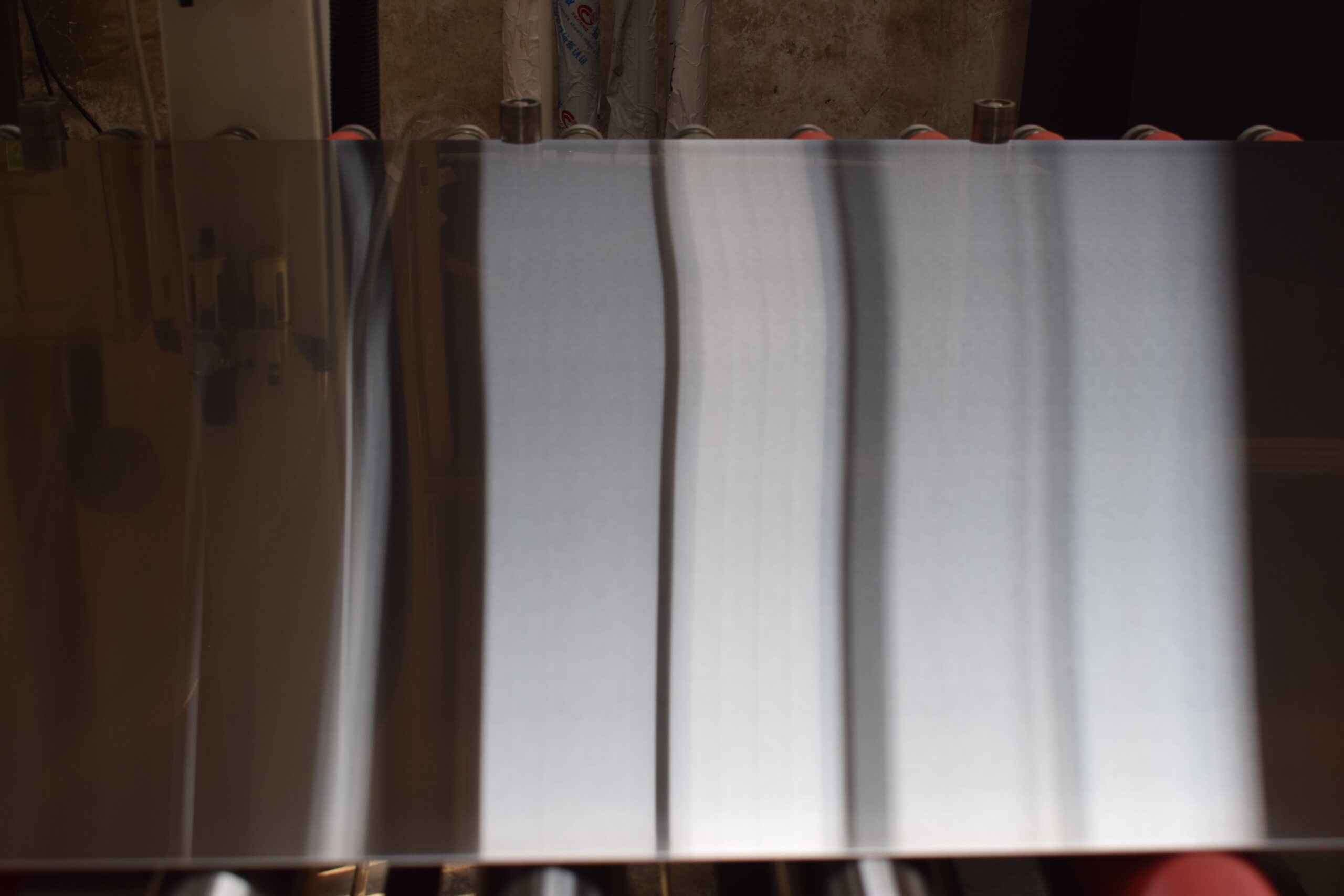
When the incoming 2B or BA surface is already clean and consistent, fewer abrasive stages may be required. If scratches or other defects must be removed, a coarser first stage may be necessary before progressively refining the surface. Excessively aggressive grinding can create deep lines, heat discoloration or unnecessary material removal. An abrasive jump that is too large may leave the previous scratch pattern visible beneath the final finish.
During continuous processing, the machine must keep the abrasive contact stable across the working width. Uneven pressure can produce dark and light bands, different roughness at the center and edges, or visible transitions between abrasive heads. Belt tracking, contact-roll condition, head alignment and work-roll parallelism therefore require regular inspection. For coil processing, strip tension and lateral guiding are equally important because strip movement changes the relative path between the abrasive and the metal surface.
Line speed and abrasive speed must be coordinated with cutting pressure. A slower line speed increases dwell time, but it can also increase heat and stock removal. A faster line may improve output but can leave an incomplete or inconsistent texture if the abrasive contact is insufficient. The correct settings must be developed through sample trials and then controlled as a process window rather than treated as universal values.
Wet and dry finishing arrangements require different supporting systems. Wet processing can help control heat and carry away grinding debris, but coolant delivery, filtration, drying and wastewater handling must be engineered properly. Dry lines require effective dust extraction and careful control of combustible metal dust hazards in accordance with the factory’s applicable safety requirements. The suitable method depends on the material, abrasive process, target surface and plant conditions.
Challenges for Metal Processors
The first major challenge is translating a customer’s visual expectation into a repeatable technical target. A written request for “No.4” may not define gloss, grain length, roughness range, viewing direction or acceptable batch variation. An approved physical sample, agreed inspection lighting and clearly defined acceptance method reduce misunderstanding.
The second challenge is maintaining consistency as abrasive belts wear. A new belt cuts differently from a partially used belt, while a loaded or glazed belt can generate heat and reduce cutting efficiency. Processors should record belt life, dressing or cleaning practice, replacement sequence and the point at which surface quality begins to change. Replacing every belt at the same time may create an abrupt change in appearance; replacement strategy should be validated for the actual line.
Flatness and handling also affect the final surface. Thin sheets can vibrate or move under an unstable hold-down system. Coil edges may react differently from the center if tension, crown or contact pressure is not balanced. After polishing, fingerprints, roller contamination, stacking abrasion and poorly applied protective film can damage an otherwise acceptable finish. Cleaning, drying, inspection, lamination and unloading should therefore be treated as part of the finishing process.
Another common problem is using roughness alone as the acceptance criterion. Roughness measurement is valuable, but surfaces with similar numerical values can look different because grain direction, scratch distribution and reflectivity also matter. Visual comparison and instrumental measurement should be combined where the application requires close appearance control.
How Advanced Polishing Equipment Improves Production
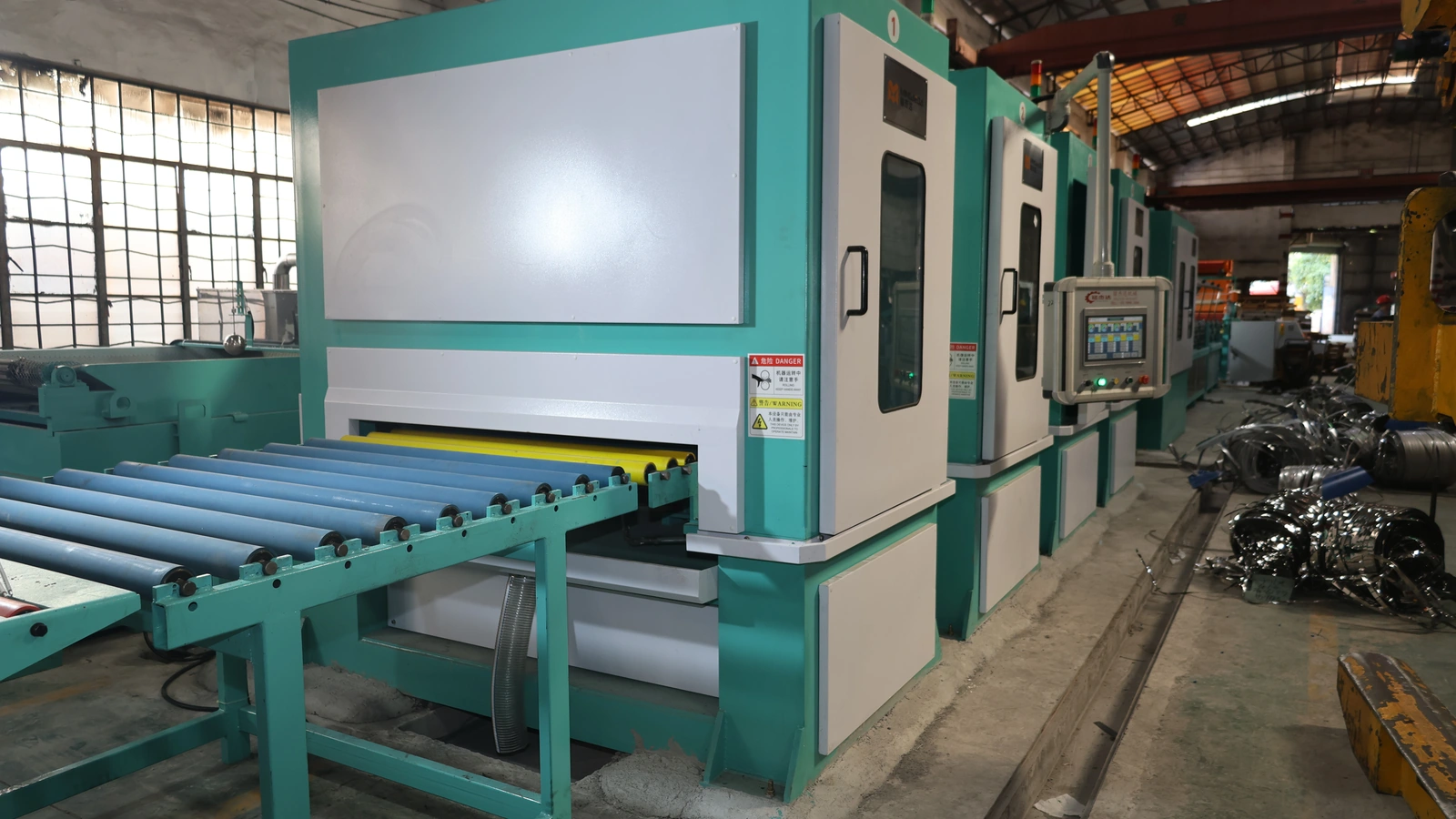
Advanced polishing equipment improves repeatability by controlling the variables that manual finishing cannot maintain easily over large sheets or long coils. Multiple abrasive heads can separate defect removal from final texture development. Stable contact systems help distribute pressure across the width, while controlled transport reduces stop marks and irregular grain.
For coil-to-coil lines, coordinated uncoiling, leveling, tension control, centering, polishing, cleaning, drying, film lamination and recoiling can create a continuous production route. For sheet-to-sheet machines, entry and exit conveyors, sheet hold-down, head positioning and controlled pass sequences support flexible production. The equipment configuration must be selected according to the incoming surface, product dimensions, target finish, required output and factory utilities.
Automation also supports traceability. Recipes can record the main operating settings for an approved product, while operators still inspect belt condition, coolant or extraction performance and actual surface quality. Automation does not replace process development; it helps reproduce a validated process with fewer uncontrolled variations.
GLORY MACHINERY Solutions
GLORY MACHINERY focuses on stainless steel surface-finishing equipment for both coils and sheets. Its relevant equipment scope includes coil-to-coil finishing lines, sheet-to-sheet polishing machines and solutions for No.4, Hairline and Scotch-Brite surfaces. The company also works with titanium polishing lines and 8K mirror polishing equipment for applications requiring different processing routes.
For a No.4 project, the engineering discussion should begin with material grade, 2B or BA incoming condition, coil or sheet dimensions, known defects, approved finish sample, production flow and downstream protection requirements. The number of polishing stages, abrasive arrangement, wet or dry process, handling system and automation level should be confirmed from these inputs. Final equipment specifications and performance targets require project-specific verification.
Conclusion
No.4 stainless steel finish is a directional mechanically polished surface valued for its practical appearance and broad application range. It is commonly produced from 2B or BA material, but the result depends on the complete process rather than the starting finish or final grit alone. Incoming-material quality, abrasive sequence, pressure, speed, belt condition, strip or sheet control, cleaning and protective handling all influence consistency. Metal processors that define the target with approved samples and control each production stage are better positioned to deliver a stable No.4 surface across batches.
Related reading: 1600mm coil polishing line for No.4 and hairline finish · sheet-to-sheet No.4 and SB polishing line
WeChat
Scan the QR Code with WeChat