 GLORY MACHINERY | Metal Polishing & Grinding Solutions
A stainless steel coil does not get its final surface from the rolling mill. Rolling is what sets thickness, width and strength — but the surface that leaves the mill is rarely the surface a buyer wants to see. Understanding why is the first step to understanding where polishing fits in the coil processing chain.
It starts with hot rolling. A heated slab is rolled down to coil, and at those temperatures an oxide scale forms on the surface. That scale, together with unevenness left by casting and hot rolling, has to be dealt with before the material can move on. Industry practice is to descale hot-rolled strip — by shot blasting, pickling, grinding or a combination — because scale left in place damages both appearance and corrosion resistance. As the Specialty Steel Industry of North America (SSINA) notes, any oxide formed by heating should be removed to restore stainless steel to its optimum corrosion-resistant condition.
Cold rolling then takes over. Hot-rolled, annealed and pickled coil is rolled at room temperature to a precise thickness and a smoother finish. This step improves dimensional accuracy and surface quality, but it also work-hardens the steel: the more it is reduced, the harder and less formable it becomes. That is why annealing is needed at various points in cold rolling production, to restore ductility before further processing or forming.
Cold rolling also has a limit that buyers often overlook: it cannot fully erase what came before it. Surface roughness and defects carried over from hot rolling, annealing or pickling can survive cold rolling, and new marks can be added along the way — scratches from handling, roll marks, or uneven gloss. Published process descriptions stress that cold-rolled strip is held to strict surface standards, and that grinding is commonly used to remove defects from earlier stages as well as from cold rolling itself. In other words, rolling shapes the coil; it does not finish it.
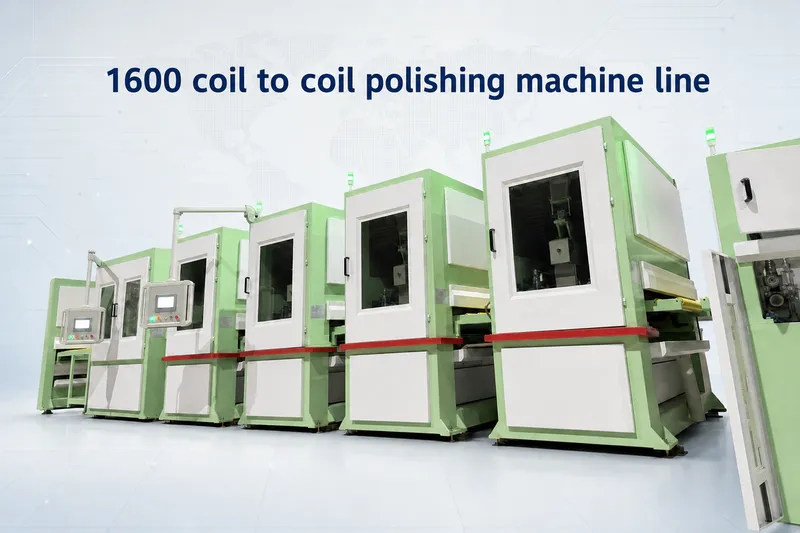
That is where the middle step of the chain comes in. Between rolling and final heat treatment, a coil-to-coil polishing line mechanically grinds and polishes the strip surface to a defined finish — for example a No. 4 brushed finish, a hairline finish, or a higher-reflectivity mirror finish. Unlike pickling, which cleans chemically, mechanical polishing removes a thin surface layer and replaces an uneven, scaled or marked surface with a uniform, controlled texture. The choice of finish is not cosmetic only: a consistent brushed surface hides light handling marks in high-traffic applications, while a mirror finish is specified where reflectivity is the point.
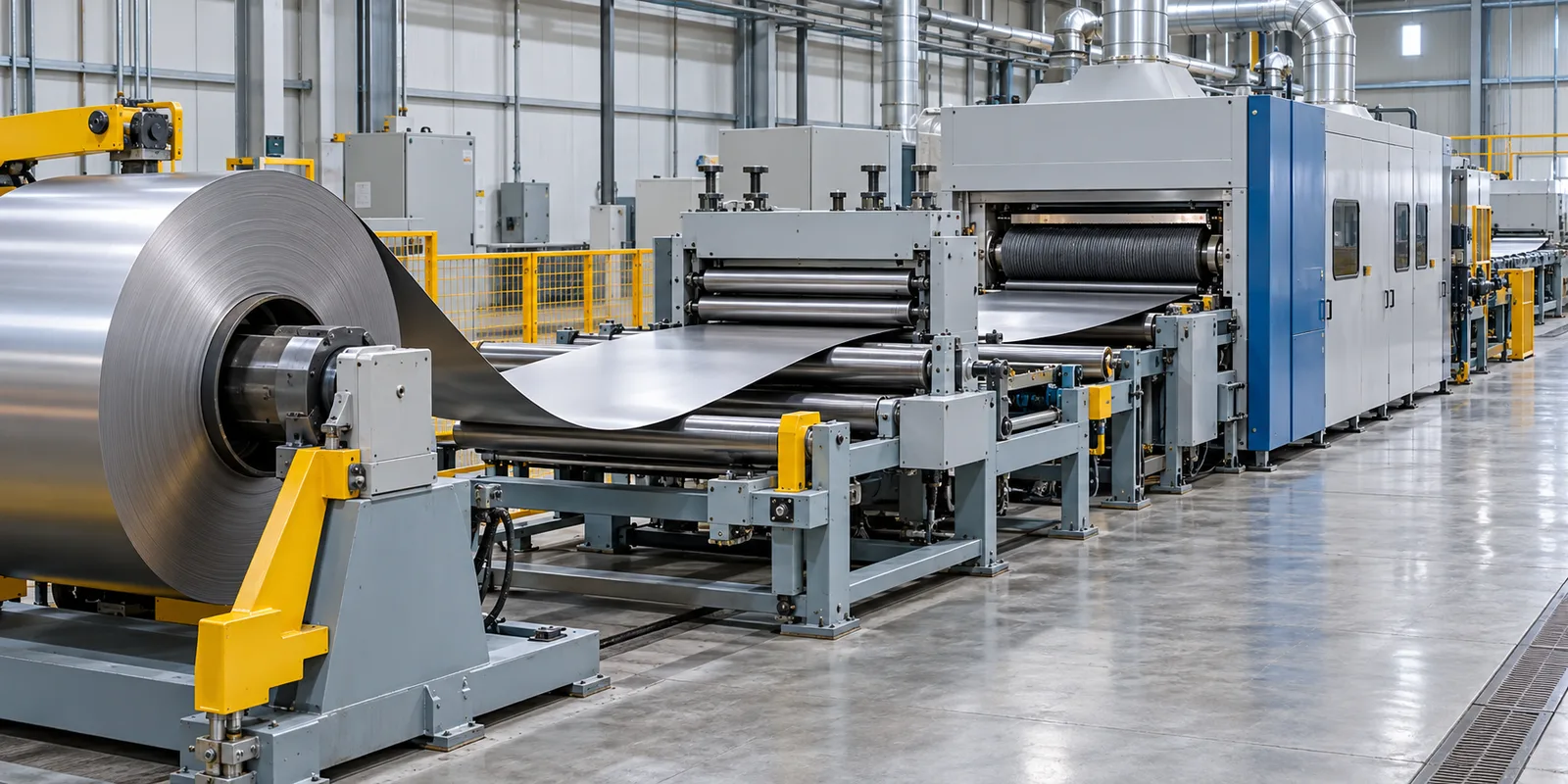
So the practical sequence for a quality coil is: rolling mill, then polishing, then annealing. Rolling gives the coil its dimensions and strength. Polishing gives it a clean, uniform surface. Annealing, covered in our companion article, then restores the formability that cold rolling took away — and the surface that enters the furnace determines much of what comes out of it.
GLORY MACHINERY supplies coil-to-coil polishing lines for No. 4, hairline and mirror finishes on stainless steel coil. Contact us for details on matching a line to your coil width and target finish.
WeChat
Scan the QR Code with WeChat