 GLORY MACHINERY
Sheet-to-sheet polishing is a surface finishing method in which stainless steel sheets are processed one at a time. Each sheet is loaded individually, carried through the grinding and polishing heads on a conveyor, then cleaned, dried, protected with film and unloaded — a complete finishing cycle for every single sheet.
Because every sheet is handled as a discrete piece, sheet-to-sheet polishing is the natural choice for cut sheets and plates: mixed sizes, small batches, and sheets that are too thick, too short or too rigid to be processed as coil.
Watch: 3D animation of a 1600 automatic wet-oil sheet-to-sheet polishing and grinding line.
How a Sheet-to-Sheet Polishing Line Works
A fully automatic line runs the whole cycle without manual handling between stations:
- Vacuum loading. A suction gantry or manipulator lifts one sheet from the stack and places it on the conveyor.
- Edge deburring. The sheet stops briefly for leading-edge deburring, then moves forward.
- Grinding and polishing. The sheet passes under the polishing heads in sequence. Abrasive-belt heads produce the No.4 finish, non-woven heads produce Scotch-Brite, and a hairline unit can be added as an optional station.
- Cleaning and drying. High-pressure spray washing and hot-air drying remove polishing residue and water.
- Film lamination. A protective film is applied to the finished surface — every sheet needs it before stacking and transport.
- Automatic unloading. Finished sheets are unloaded and stacked automatically, ready for packing.
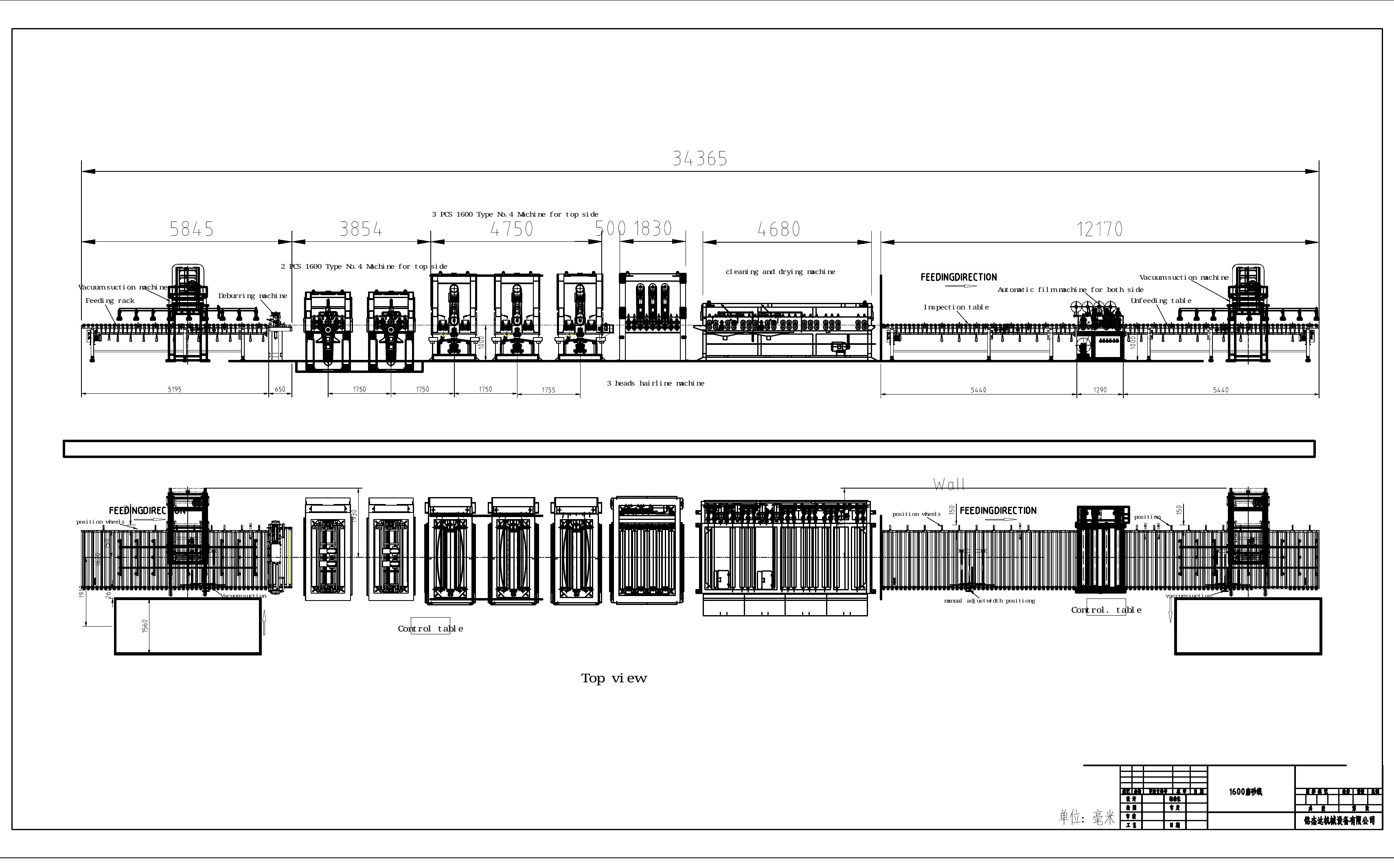
Wet-oil lines polish with oil-based coolant for a finer, more uniform grain; dry lines are also available for suitable finishes.
Finishes a Sheet Line Can Produce
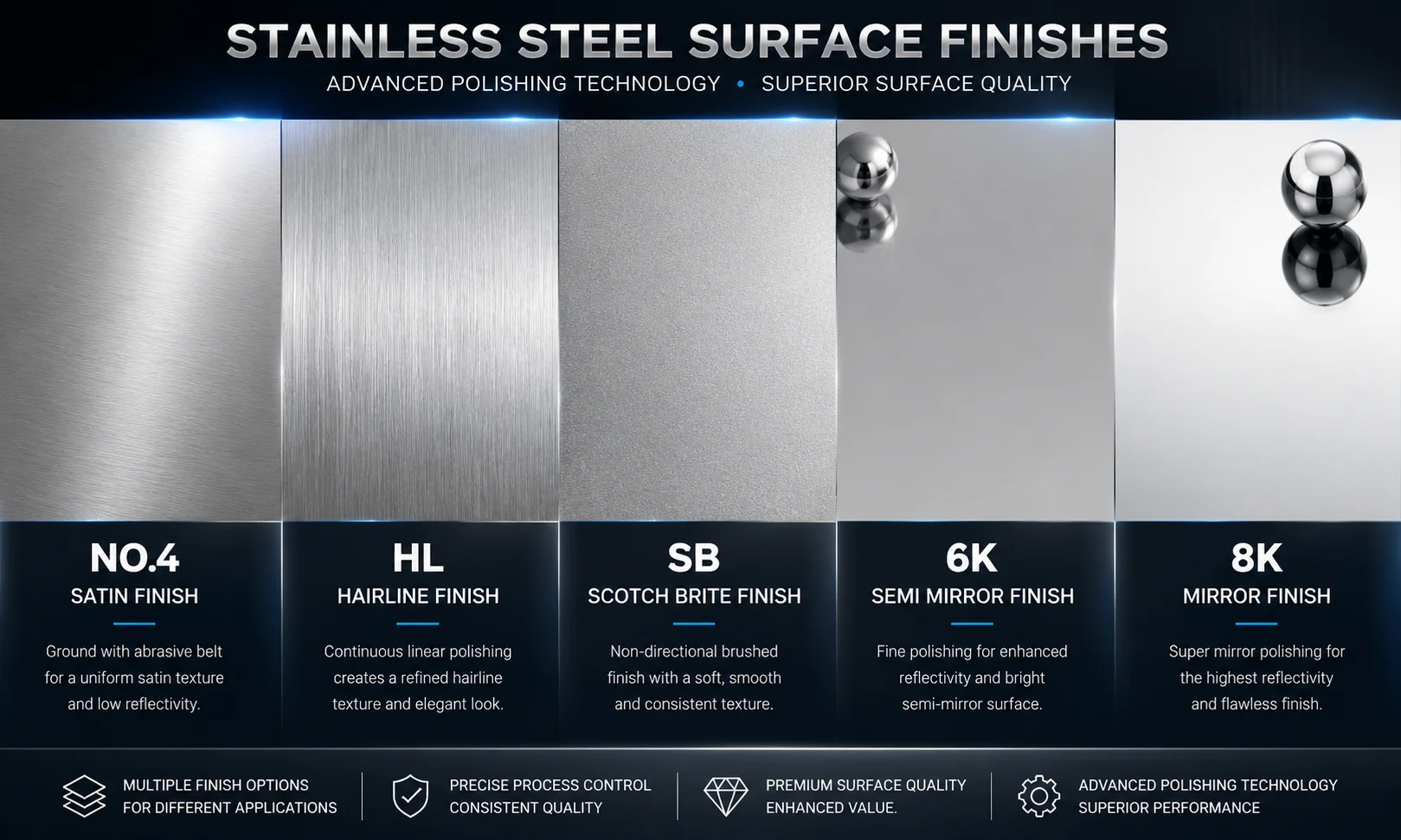
One line can combine several finishes: No.4 (the standard satin finish for appliances, elevators and kitchen equipment), Scotch-Brite (a soft, low-gloss satin), and Hairline (a fine continuous linear texture). For mirror work, sheet lines use rotary disc polishing heads to reach an 8K (No.8) mirror finish — see our rotary disc 8K mirror polishing machine page.
Flexible Combinations: Build the Line Around Your Finishes
A sheet-to-sheet line is not one fixed machine — its grinding and polishing section is combined from individual units, so the line is built around the finishes you actually sell. Typical combinations include:
- No.4 only — for example a 3-head No.4 machine, for producers who sell satin-finish sheet.
- No.4 + Hairline — a 3-head No.4 machine followed by a hairline machine, covering the two most common decorative finishes.
- No.4 + Scotch-Brite + Hairline — the full satin family on one line.
The No.4 section itself is configured by surface: the grinding heads can work the top surface only, or both the top and bottom surfaces. In practice, most producers finish the top surface only — it is the visible, working face of the sheet — so top-surface grinding is the standard configuration, as in the layout drawing above. Bottom-surface heads are added when both sides of the sheet must be finished. The loading, cleaning, drying, film-laminating and unloading units stay the same whichever combination you choose — only the grinding section changes.
Sheet-to-Sheet or Coil-to-Coil?
Choose sheet-to-sheet when your material arrives as cut sheets, when sizes change often, or when batches are small to medium. Choose coil-to-coil when you process full coils continuously at volume — our guide to coil-to-coil polishing explains the continuous process.
See the Machine
The animation above shows GLORY’s 1600 automatic wet-oil sheet-to-sheet line. Full configuration and specifications are on the product page: 1600mm stainless steel sheet polishing machine line. Send us your sheet sizes, thickness range and target finish, and we will propose a line configuration.
WeChat
Scan the QR Code with WeChat